Installing Data Cables in Multi-Storey Homes: Challenges, Myths, and the Quality Difference
Nov 11, 2026
Installing Data Cables in Multi-Storey Homes: Challenges, Myths, and the Quality Difference
Multi-storey homes have a reputation for being difficult to wire. Sometimes that's true — and sometimes it's the easiest job on our calendar. This post pulls back the curtain on what actually happens when we run data cabling through a multi-level home, why it's different to electrical work, and why we refuse to compete on price.
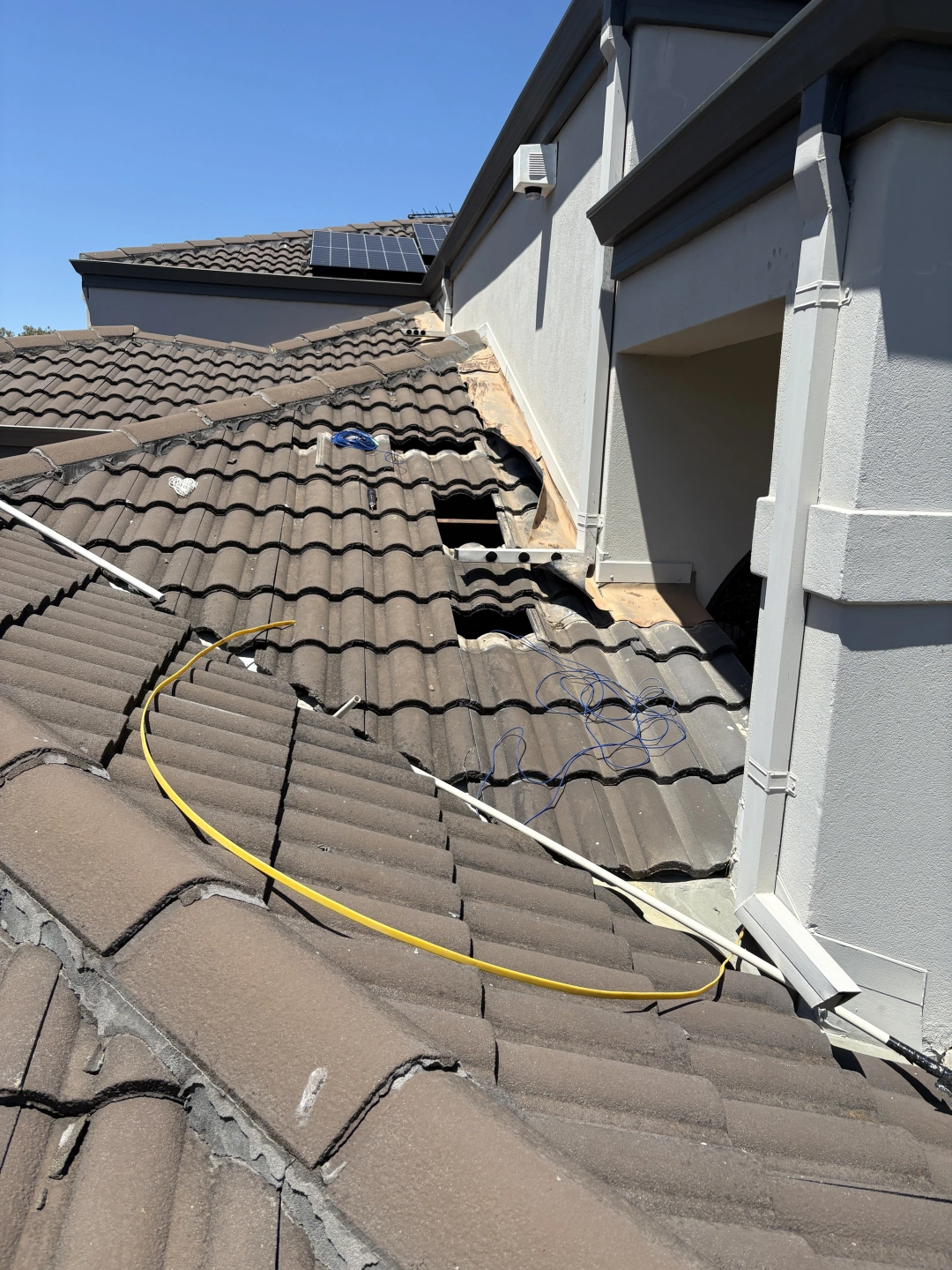
(As seen in the photo above, rooftop access is a common pathway for running cables down through a multi-storey home.)
The Point-to-Point Rule (And the Switch Exception)
Data cabling follows stricter rules than electrical wiring.
Ethernet cable must run point-to-point — one continuous cable from your router, switch, or comms cabinet directly to the destination device. No joins. No splices. No cutting into an existing cable to branch off another one. Every physical join introduces signal loss and a potential point of failure, and unlike power circuits, high-speed data won't tolerate it.
But here's what separates a good cabler from a great one: we can tap off an existing connection using a network switch — sometimes a small unit on a desk, sometimes a proper comms cabinet. That's not a cable join; it's a network branch. The original cable stays point-to-point, and every new cable from the switch does too.
It's a legitimate, common solution — and it's where good network design matters more than just pulling cable.
NBN Cable Pathways in Multi-Level Homes
If your NBN connection box is stuck in the garage or front hallway, your Wi-Fi is fighting concrete floors and distance before it even reaches upstairs.
We install compliant NBN cable pathways to fix that:
Relocating the NTD — Under nbn's Authority to Alter guidelines, we can move the connection box to a central location where your router actually belongs.
Fibre optic cabling — High-speed, future-proof bridging between your NBN equipment and router. We install fibre with a steel-core armour jacket to prevent rodent and accidental damage — a detail some Perth operators skip, until the cable fails.
P20 conduit and draw string — Protected pathways that meet Australian Standards (AS/CA S009:2020).
Not All Multi-Level Homes Are Created Equal
Here is a secret from the trade: sometimes, a multi-storey home is actually easier to wire than a single-storey home.
It all comes down to the architecture. As you can see in the photo above, we often encounter split-level designs or homes where a section is single-storey (such as an extension or a garage). These layouts often provide rooftop access or cavity access that makes running cables down to the lower levels surprisingly straightforward.
While the "hourly rate" for a two-storey job might sound higher on paper, the physical access in a well-designed multi-level home can often balance that out. We can navigate roof spaces and wall cavities efficiently, getting the job done faster than you might expect.
Quality Hardware and Proactive Monitoring: The Ubiquiti Advantage
Cabling is only half the story. The hardware you put on the end of that cable determines whether your network is reliable, secure, and easy to manage.
When we install quality network hardware like Ubiquiti products, we unlock a level of visibility and control that consumer-grade gear simply can’t match. Ubiquiti’s ecosystem—access points, switches, routers, and the UniFi controller—gives us a single dashboard to monitor the entire network.
What that means for you:
NBN faults: We can see when the connection drops at the NBN boundary, so you know whether the problem is on your side or the provider’s. No more guessing, no more blaming the wrong party.
Wiring faults: If a cable is damaged, a port is failing, or a link is negotiating at the wrong speed, the system flags it. We can identify the exact cable run or switch port before it becomes an outage.
Wi-Fi faults: We can monitor signal strength, channel interference, roaming behaviour between floors, and client experience. In a multi-storey home, this is gold—we can prove whether that dead spot upstairs is a coverage issue, an interference issue, or a faulty access point.
Network security: Ubiquiti gives us proper VLAN segmentation, firewall rules, guest network isolation, and firmware management. We can keep your IoT devices (smart TVs, cameras, thermostats) on a separate network from your work laptops and banking devices—without slowing anything down.
This is the difference between “we ran some cables” and “we built you a network you can actually see and trust.” Proactive monitoring means faults get caught early, security stays current, and you’re not relying on a blinking modem light to diagnose a problem.
Why We Compete on Quality, Not Price
This brings us to the most important part of this post.
We regularly find work in Perth that is, quite frankly, terrifying. The photo below is of a data socket we found in Scarborough.
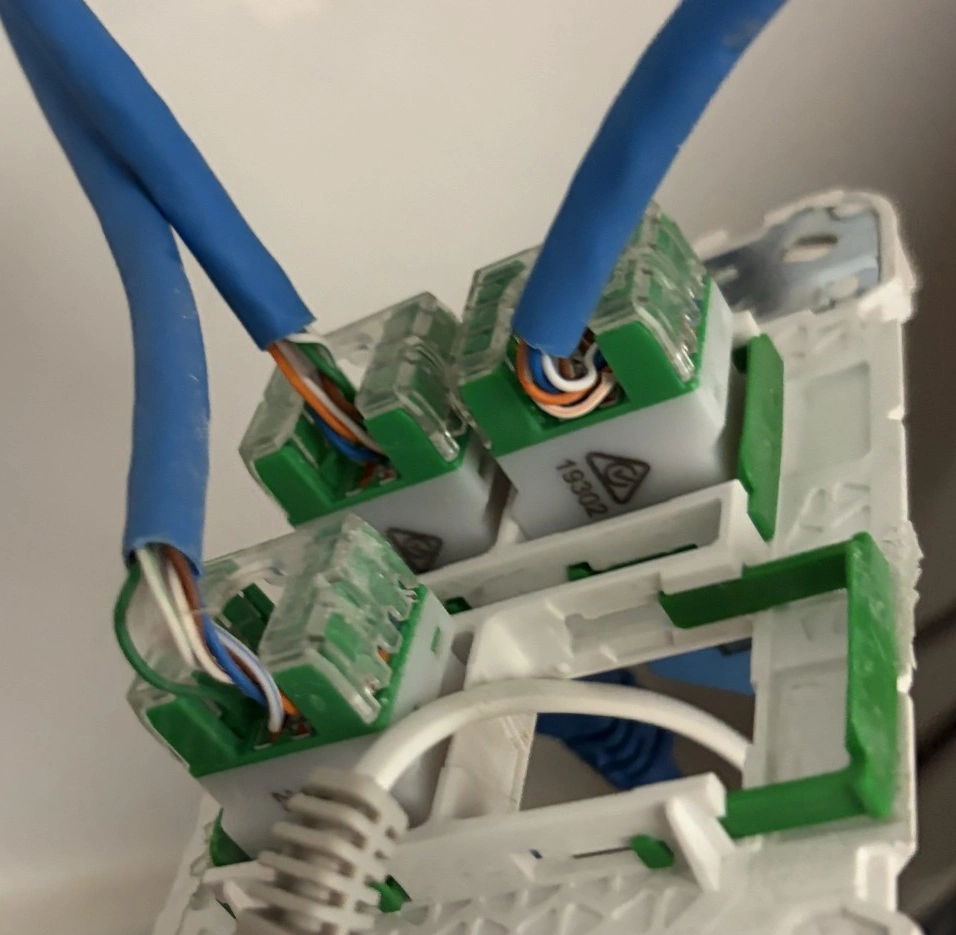
Take a close look at the termination. The wires are excessively untwisted. This caused an actual fault with our clients TV for streaming Netflix. This work was supposedly completed by a licensed tradesperson, yet it results in slow speeds, dropouts, and a complete lack of reliability. It is a mess. The best part is that this termination passed basic 'wire map' testing.
It is hard to be compared to other companies when we regularly find work like this.
When you hire us, you aren't just paying for cable; you are paying for:
Correct terminations that meet industry standards.
Technicians who respect your home while working on it. If we cause damage - we let you know.
Testing to ensure your speeds are exactly what they should be.
Quality hardware (like Ubiquiti) that we can monitor and manage, so faults are caught early and security is built in.
A clean, safe, and professional finish.
And it’s not just about the finished product. We are fully compliant with ACMA regulations.