Why We Turn the Power Off (And Why It Matters)
Oct 14, 2026
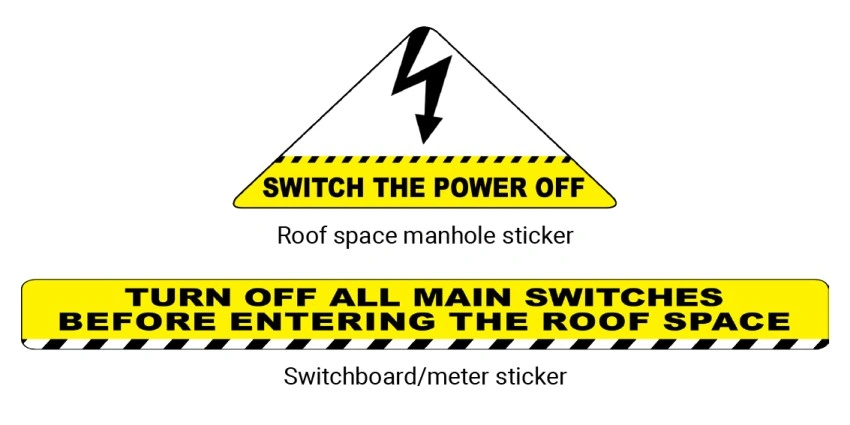
If you've ever had us out for a job and wondered why we insist on cutting the power before we start, these photos are the reason. We did this before it became law to do so.
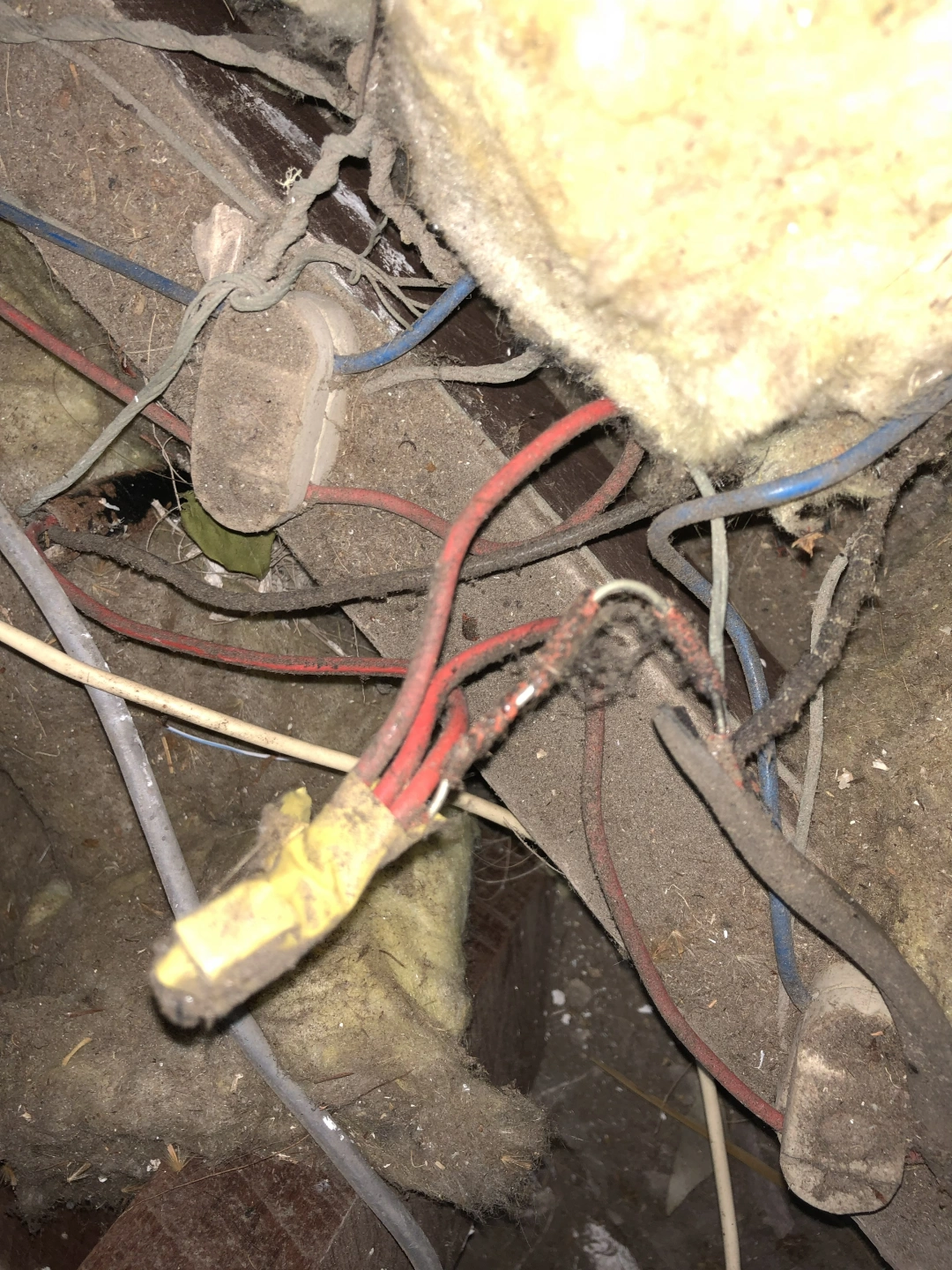
Dodgy Electrical Isn't Rare
Take the photo above: red wires with bare sections, a join wrapped in nothing but electrical tape, and a lead-sheathed telephone cable sitting dangerously close to exposed active wires. If that telephone cable touched those actives, it wouldn't be a good day for anyone in the circuit.
This cable appears to be Vulcanised Indian Rubber (VIR), widely used from the 1930s to the late 1960s. The rubber insulation degrades over time due to oxidation, heat, and environmental exposure. When it reaches the end of its life, the material becomes hard, brittle, and loses its mechanical strength — causing it to simply fall off or disintegrate when touched. Once the sheath is gone, live conductors are exposed, creating a severe risk of electric shock and electrical fire.
We come across this more often than you'd think. Wiring that's been added to, patched up, or "made to work" by someone who shouldn't have touched it. Sometimes it's obvious. Sometimes it's hidden behind a wall or under a floor, waiting for someone to lean on it.
When we're working in your roof, under your floor, or inside a wall cavity, we're often working near live wiring that isn't ours. If something's already compromised, we don't want to be the ones to find out the hard way.
A Recall You Need to Know About
There's another layer to this problem. Infinity Cable Co Pty Ltd issued a national safety recall for all sizes and configurations of its INFINITY and OLSENT brand white TPS (Thermoplastic Sheathed) and Orange Round mains power cables, supplied roughly between 2010 and 2013. This is yet another reason why authorities have decided that we must turn the power off before entering a roof space to install cables.
Why were they recalled?
Safety failure: The plastic insulation doesn't comply with Australian electrical safety standards (AS/NZS 5000) due to poor-quality materials.
Degradation risk: The insulation becomes prematurely brittle and cracks over time — especially when exposed to heat or disturbed — exposing live internal conductors.
Hazards: Exposed wires create a severe risk of electric shock and potential electrical fires.
If your home was built or renovated between 2010 and 2013, there's a real chance this cable is installed behind your walls or in your roof space. Recalled cables found in accessible areas or near heat sources must be safely removed and replaced under the supplier recall arrangement.
This Isn't Scare Tactics. It Happened.
In July 2023, a 24-year-old electrician named Matthew Milner was working in a roof space in Nollamara, right here in Perth. He was installing a power point. The homeowners heard a bang, then a cry. They found him up there.
The power hadn't been switched off.
He'd been qualified less than a year. Married just twelve months earlier. His wife Monique wrote: "Always and forever my boy. Watch over me whilst I live out the life we were meant to live together."
The Director of Energy Safety in WA, Saj Abdoolakhan, said it plainly: switching off the power is required by law for anyone entering a roof space, because of exactly this risk.
Matthew didn't get to go home. His death was preventable. That's the part that gets us.
So when we say we're cutting the power before we head up — it's not us being difficult. It's not a power trip. It's because we've seen what happens when someone doesn't, and we're not putting our names on that.
And Then There's the Data & NBN Cabling
This below photo is something we found a professional had done for a real estate agent. We find real estate agents can be very price dependent - this is what you get when you pay half the price for 'the same job'. This is brand new CAT6 cable that we found connected to old lead sheathed telephone cable. The entire cable required replacement to the street to sort this out.
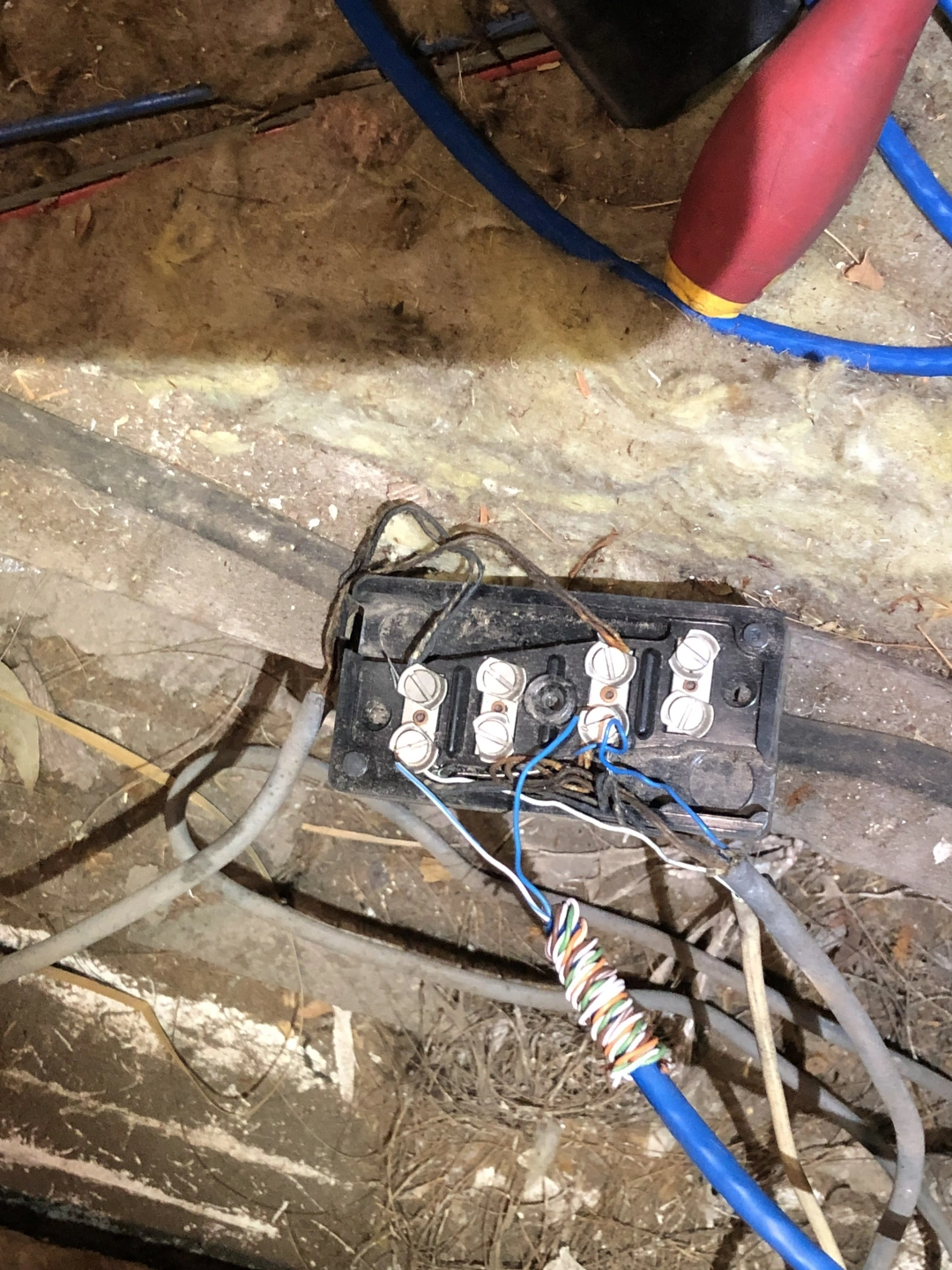
The new cable is fine. The problem is what it's been connected to.
You can't get reliable performance out of modern cable when it's tied to legacy infrastructure that was never designed for it. And when something goes wrong later, it's the new work that gets blamed — not the 40-year-old cable it was joined to.
What We Do Differently
When we're working in your roof, under your floor, or inside a wall cavity, we're often working near live wiring that isn't ours. If something's already compromised, we don't want to be the ones to find out the hard way.
That's why we isolate the power before we start. Not because we're being difficult — because we don't know what's behind the plaster until we're in there. And because it's the law.
We test before we assume. We isolate power before we work. And when we find something like the photos above, we tell you — because you deserve to know what's actually going on behind your walls.